1800 – 1891
The Peak of the Windsor Influence
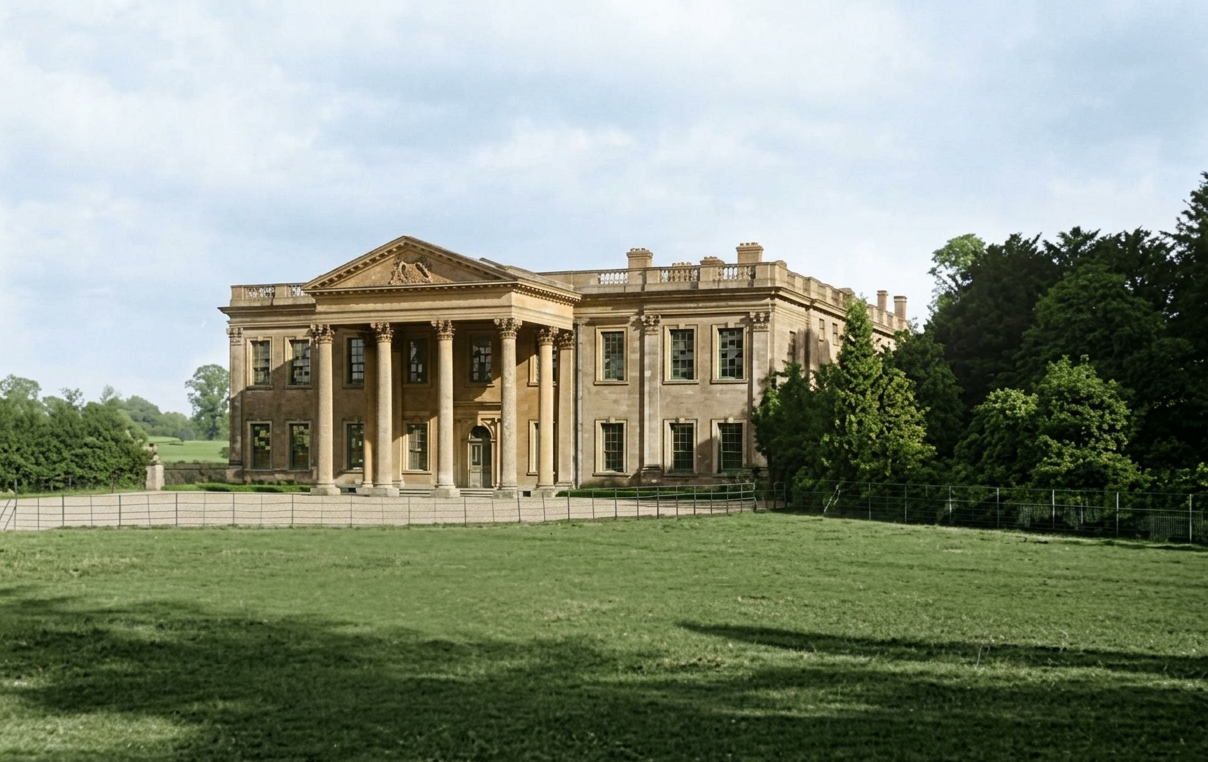
By the mid-19th century, Hewell was at its social and political zenith. The Windsors (Earls of Plymouth) had transformed the estate into a Victorian powerhouse. This era saw the "Old House" by the lake reaching its limits, serving as a hub for national politics and high society. However, the site’s low-lying position remained a problem, with rising damp and drainage issues plaguing the 18th-century structure.
1891: The Christmas Eve Catastrophe
The sudden end of the "Old House" came on Christmas Eve, 1891. The cause was a modern luxury that turned into a nightmare: the overheating of a newly installed "low-pressure" hot water heating system. A flue or pipe ignited the timber-heavy internal structure. Despite the efforts of local fire brigades from Redditch and Bromsgrove, the 18th-century mansion was gutted. The fire was so intense it was reportedly seen for miles, leaving only the stone shell standing by Christmas morning.
The Shift to the "New" Grange
What is often overlooked is that the fire occurred while the family was already planning a monumental change. In the 1880s, the 14th Lord Windsor (later the 1st Earl of the second creation) had commissioned architects Bodley & Garner to build a vast new mansion on the higher ground. The 1891 fire effectively "cleared the decks," forcing the family to move their focus permanently from the lakeside ruins to the massive red-brick Jacobean-style house we see today.
Bodley & Garner Designs
The new house was designed in an "Old English" style, utilizing red brick and Runcorn stone—a stark contrast to the neo-classical style destroyed in the fire.
Infrastructure Survival
While the main house burned, the farm buildings at the original Hewell Grange survived, proving once again that the site's agricultural bones were more durable than its high-status skin.
| Era Detail | Status 1850 | Status 1891 |
|---|---|---|
| Principal Seat | Lakeside "Old House" | Ruined (Interior lost) |
| Family Project | Interior Refinement | Construction of the "New" Grange |
| Social Status | Country Seat | National News Subject |
| Primary Threat | Lakeside Damp | Catastrophic Fire |
The Aftermath
The 1891 fire marks the final "death" of the medieval and 18th-century lake-side cluster as the center of power. From 1892 onwards, the history of Hewell becomes the history of the **New Mansion** on the hill, while the ruins of the Old House became a picturesque feature of the Capability Brown landscape—a reminder of a lost era of elegance.